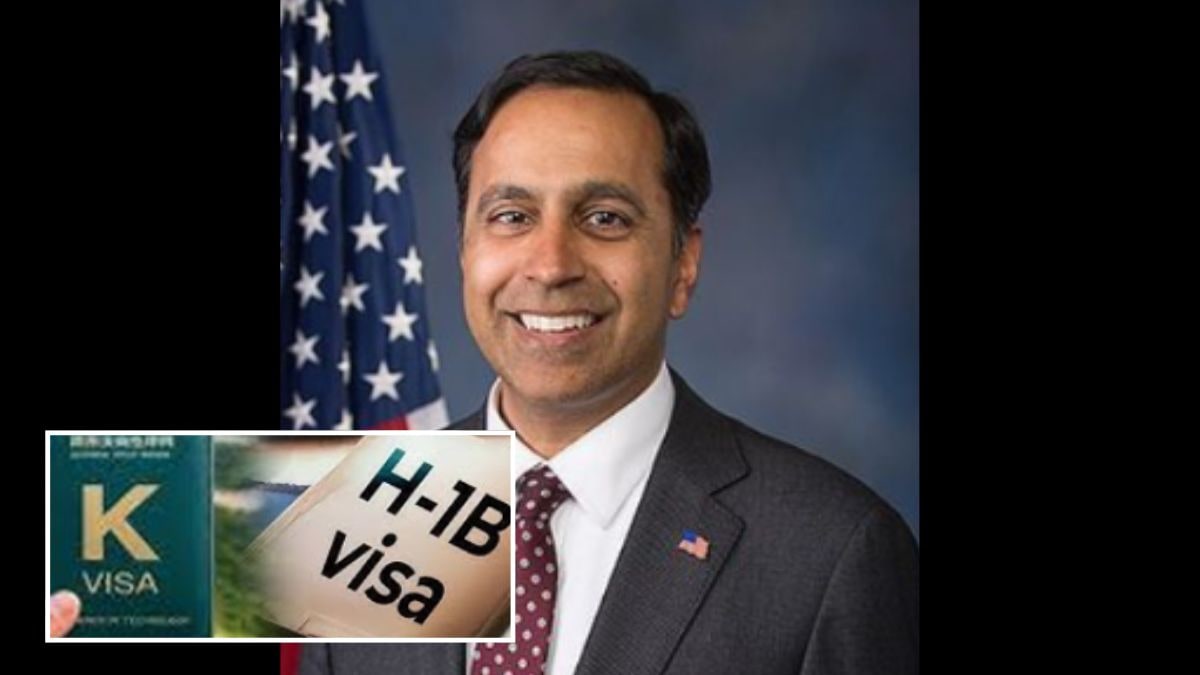
US H-1B Policy Changes Could Drive STEM Talent to China's K Visa, Warns Congressman
The article highlights a critical concern that restrictive US skilled immigration policies could inadvertently empower economic rivals by pushing highly sought-after STEM talent to other nations.

Subscribe to our newsletter and stay informed about latest H1B news, policy updates and and other developments.
Article Summary
Indian-American Congressman Krishnamoorthi warned that proposed US H-1B visa changes, including a potential $100,000 fee and limits on F/J visas, could weaken US economic competitiveness. He stated that these policies risk driving highly skilled STEM talent and wealth to China, which has introduced a new "K visa" program designed to attract young STEM graduates. A Chinese official, however, dismissed these accusations as "groundless" and not aimed at any specific country.
Original Article: financialexpress.com
[ Sentiment: negative | Tone: factual ]
This summary and analysis were generated by TheNewsPublisher's editorial AI. This content is for informational purposes only; it does not constitute legal or immigration advice.
[ Sentiment: negative | Tone: factual ]
This summary and analysis were generated by TheNewsPublisher's editorial AI. This content is for informational purposes only; it does not constitute legal or immigration advice.
TNP AI: Key Insights
This warning highlights the critical link between skilled immigration policy and national economic competitiveness, particularly for the U.S. tech sector and its ability to innovate and create jobs. Restrictive H-1B policies could inadvertently push highly educated STEM professionals towards nations actively seeking to attract them, impacting future startup growth and intellectual property.
The article references a proposed $100,000 H-1B fee and a four-year limit on F and J visas, attributed to the Trump administration. It is crucial to note that while these were indeed proposals or rules put forth during that period, the $100,000 H-1B fee was never fully implemented, and the DHS rule regarding F/J visa limits was later withdrawn. The Congressman's letter frames these past proposals as a relevant concern for future policy direction.
This discussion underscores a growing global competition for talent, with China's K visa serving as a direct counterpoint to perceived U.S. immigration hurdles. For employers, this emphasizes the need for stable, predictable immigration policies; for skilled immigrants, it highlights the expanding international landscape of opportunities where countries actively compete for their expertise.


